
Blog
Day Trading Journal: Build a Daily Review Habit
Build a day trading journal that survives busy sessions — a 10-minute daily review habit, batch logging for scalps, and a close checklist you can run every day.
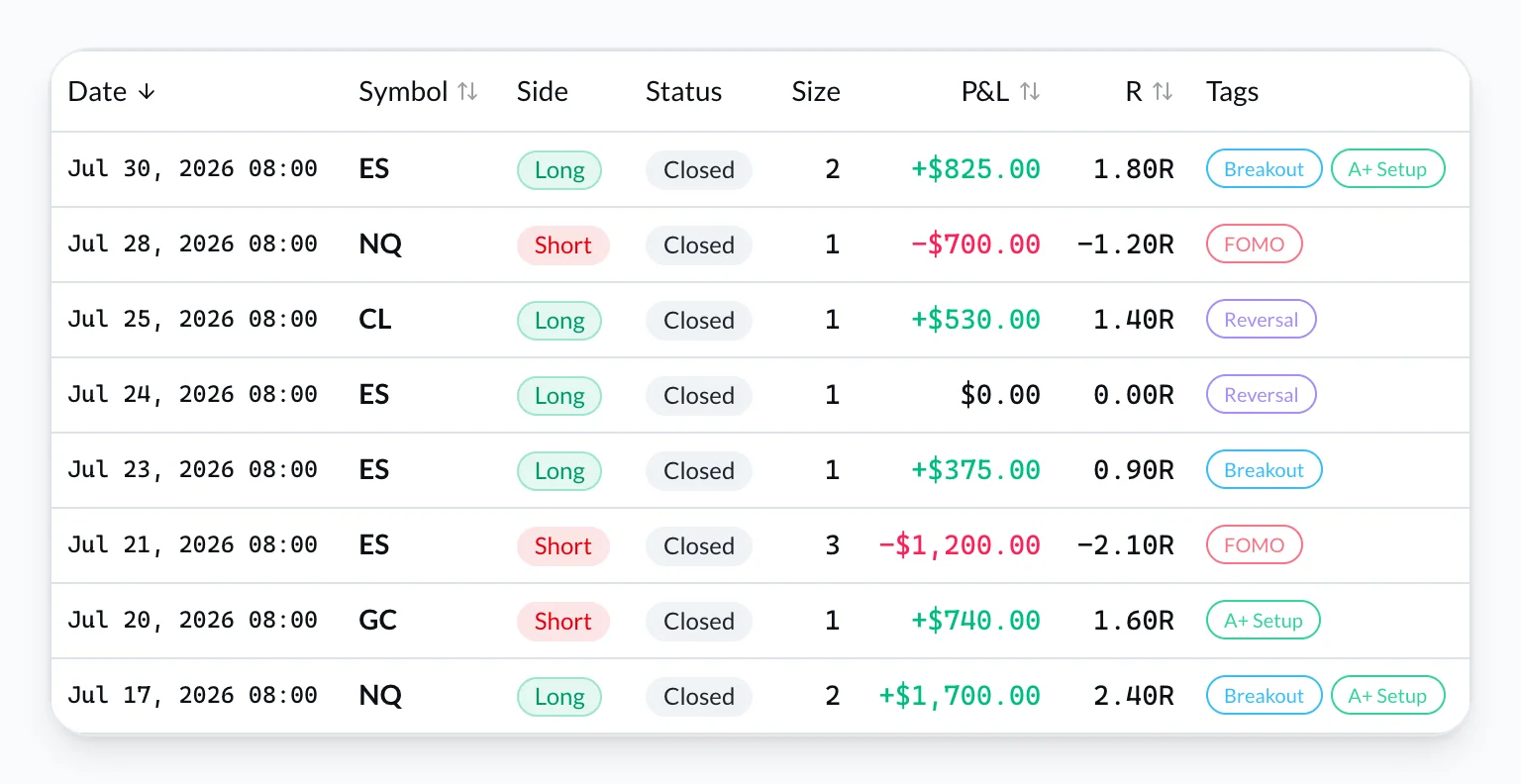
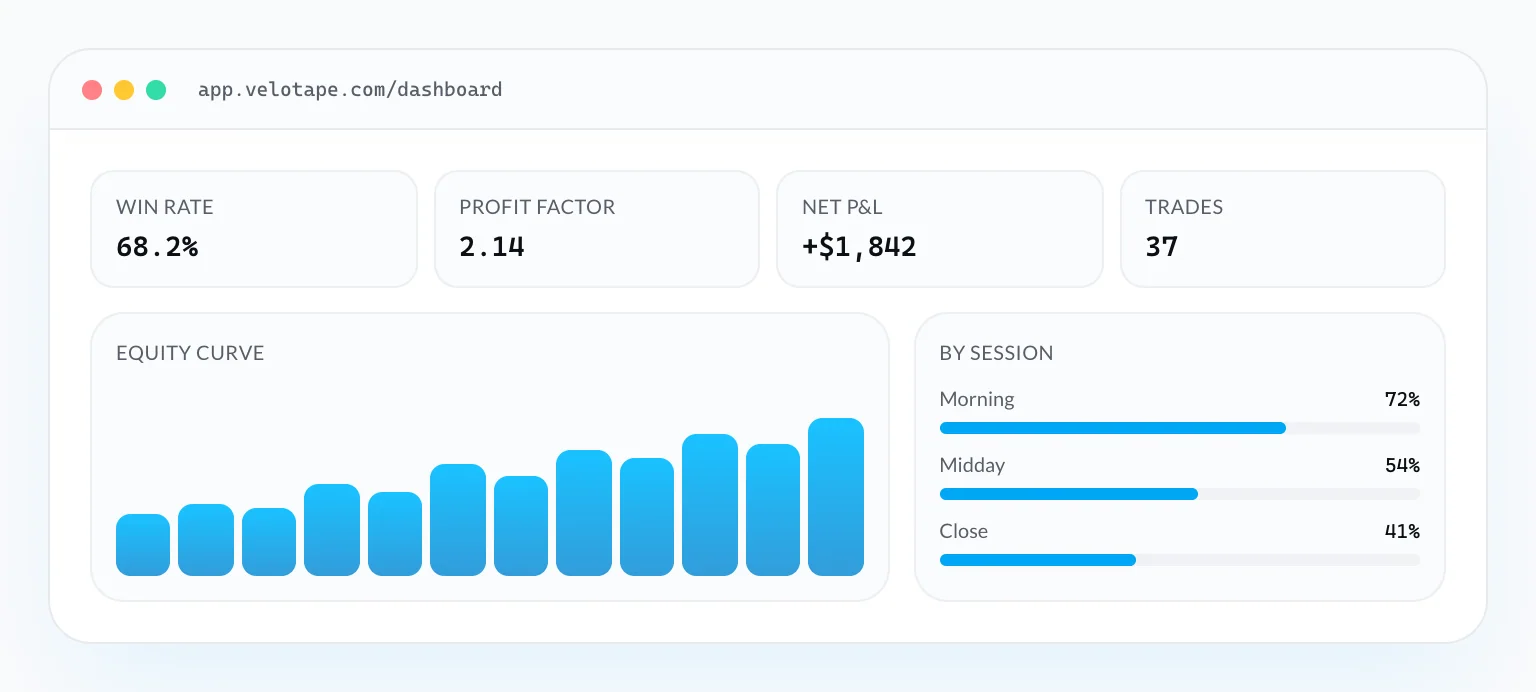
Screenshots show the VeloTape product interface (sample data for illustration).
Most day trading journal attempts die for the same reason: you took twenty fills, the session drained you, and a twenty-field form feels like another market to fight. The fix is not more motivation. It is a same-day close ritual short enough to run on red days.
This guide is for active day traders — futures, stocks, or FX — who need a habit that fits high frequency. It is not a field encyclopedia (what to record) and not the full weekly system (how to keep a trading journal). It is the daily review habit that makes those tools useful.
If you still need a free starting point, see the free trading journal guide.
Why a day trading journal is different
Swing traders can write after dinner. Day traders close the chart tired, often after a hard stop or a green blur of small wins. Your journal must assume:
- High fill count — typing every tick is how you quit.
- Session edge — open vs midday vs close often matters more than “the setup name.”
- Same-day damage control — rule breaks and revenge size show up today; wait until Sunday and the lesson cools off.
A good day trading journal answers one question before you leave the desk:
Did I trade today’s plan — and what is the one rule for tomorrow?
Pre-market: two minutes, not a novel
Before the open (or your first session), write three lines only:
- Risk cap — max day loss (and max trades if you use that rule).
- Setups allowed — three tags max (e.g.
orb,pullback,news). - Hard stop behavior — what you do when the cap hits (flat, platform closed, no “one more”).
That is the plan your daily review will score against. Skip mood essays. If you trade a prop challenge, map the cap to firm rules — see prop firm trading journal.
During the session: capture, do not compose
While the market is open:
- Let broker sync or CSV own the execution layer (time, symbol, side, size, fees, P&L).
- Do not write paragraphs between trades.
- Optional: a single hotkey note on the current trade if it was a clear rule break — one sentence max.
Your job in the session is execution. Journaling depth belongs at the close.
The 10-minute daily review habit
Run this every session you trade — green or red. Cap it at ten minutes. Use a timer if you stall.
| Step | Minutes | Action |
|---|---|---|
| 1 | 2 | Confirm fills imported; fix obvious duplicates or missing fees |
| 2 | 3 | Tag today’s trades with your short setup list (batch scalps) |
| 3 | 2 | Mark plan adherence on the worst trade(s): yes / partial / no |
| 4 | 2 | One-sentence note on the trade that defined the day |
| 5 | 1 | Write one rule for tomorrow; check day P&L vs pre-market cap |
Done. Close the journal. No scrolling social charts “for research.”
Batch journaling for scalpers
If you took fifteen micro-scalps on the same setup:
- Keep every fill in the log (imports do this).
- Apply one setup tag to the cluster after the close.
- Deep-note only the outliers — size spike, FOMO add, stop chase — not every winner.
Batching is how a day trading journal stays honest without becoming homework.
What to look at on the calendar
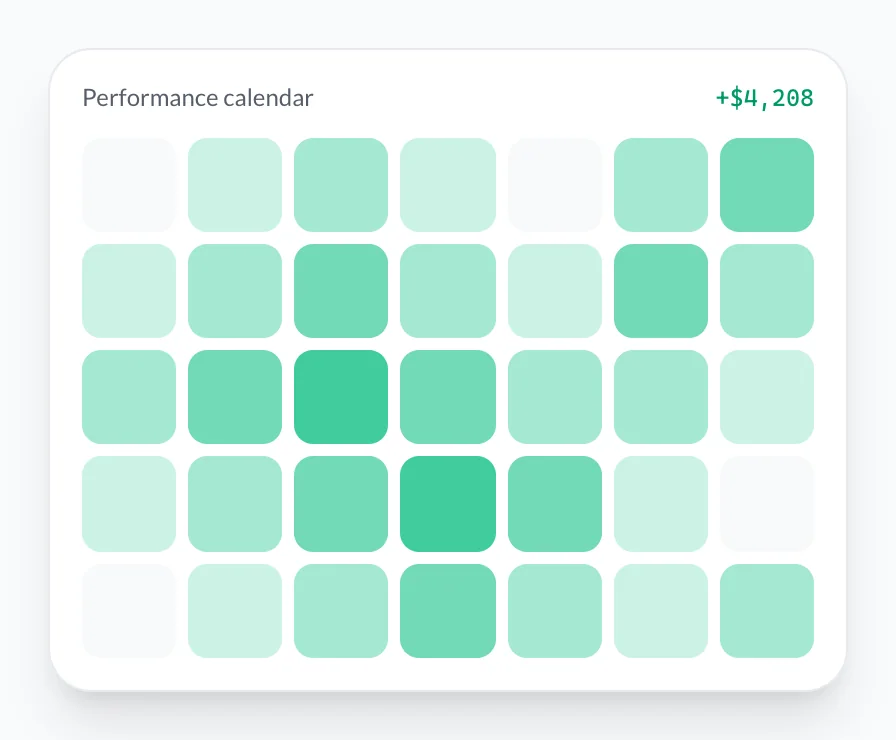
Daily review is tactical. Once a week, spend twenty minutes on the performance calendar and metrics:
- Day-of-week and session — are “midday” losses a pattern or a story you tell yourself?
- Green days that still broke rules — lucky process failures; fix them before luck flips.
- Clusters of
plan = no— that is your real edge leak, not a single red candle.
Day traders often ignore winners. Do not. Your journal should show what to repeat under the same open conditions.
Copy-paste daily close template
Use this in VeloTape notes, a doc, or a sticky. Fill once per session.
DAY CLOSE (10 minutes)
Date / session:
Pre-market risk cap:
Day net P&L (after fees):
Trades tagged: yes | partial
Setups used today:
Worst trade (one sentence):
Plan followed on worst: yes | partial | no
One rule for tomorrow:
Stopped at hard limit: yes | no | n/a
Example
Date / session: 2026-08-11 open (NQ)
Pre-market risk cap: -$400
Day net P&L: +$180
Trades tagged: yes
Setups used today: orb, pullback
Worst trade: Chased second OR break after first stop — size 2 instead of 1.
Plan followed on worst: no
One rule for tomorrow: One OR attempt only; half size until retest holds.
Stopped at hard limit: n/a
Short enough to finish after a red day. That is the point.
Tooling that keeps the habit alive
A spreadsheet can work when you take a handful of day trades. At day-trader volume, friction kills the habit — covered in trading journal vs spreadsheet.
VeloTape is built for journal + analytics: import fills (CSV on Free; broker auto-sync on Essential), tag setups, and read the calendar after the close. It is not investment advice. See /#pricing.
FAQ: day trading journal
Do I need screenshots every day?
No. Import fills daily; attach charts only for the trade you will study in the weekly review.
What if I trade two sessions (Asia + US)?
Run the 10-minute close per session you trade, or once at the end of your last session with session tags on each fill. Do not merge two plans into one blurry note.
Should psychology tags go in the daily review?
Only after the habit is automatic. If emotion tags make you skip red days, remove them for thirty sessions. Process first.
How do I restart after a week off the journal?
Start tomorrow’s close only — do not backfill a novel. Import the missing week if you can, tag setups in bulk, and resume the 10-minute ritual.
Trading involves substantial risk. A journal improves review — it does not guarantee profits.
Create your free VeloTape account — no credit card. After your next session, import fills, run the 10-minute close template, and write one rule for tomorrow.
More guides

How to Keep a Trading Journal: A Step-by-Step System That Sticks
Learn what to log after every trade, build a daily and weekly review routine, and use a simple template so your trading journal actually improves performance.

What to Record in a Trading Journal (Template Included)
Know exactly what to record in a trading journal — must-have fields, optional context that reveals edge, and a copy-paste template you can use today.

5 Trading Journal Metrics Every Trader Should Track
Win rate, profit factor, expectancy, max drawdown, and time-of-day performance — what each metric means, the formulas, and how to read them in your journal.
Trading involves substantial risk. VeloTape is for journaling and analytics only — not investment advice.